How to Solder: A Beginner's Guide
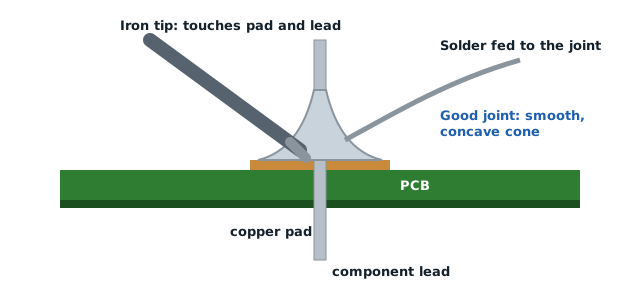
Tools, temperature, the five-second joint technique, how to spot bad joints and how to desolder mistakes, explained for your first soldering session.
→ heat the pad, not the solder
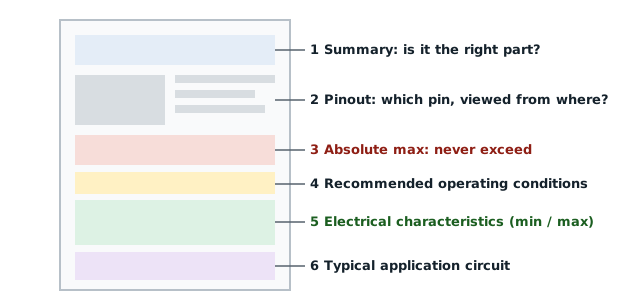
section 7, the violet band
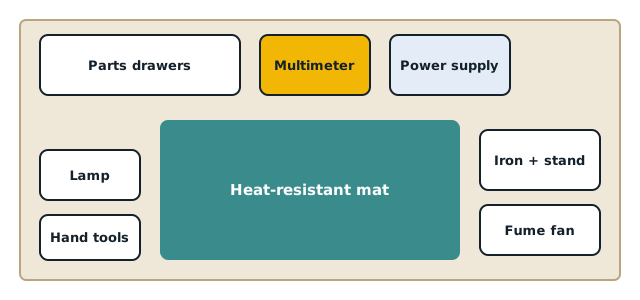
Soldering, multimeters and setting up your bench.
Tools, temperature, the five-second joint technique, how to spot bad joints and how to desolder mistakes, explained for your first soldering session.
→ heat the pad, not the solder
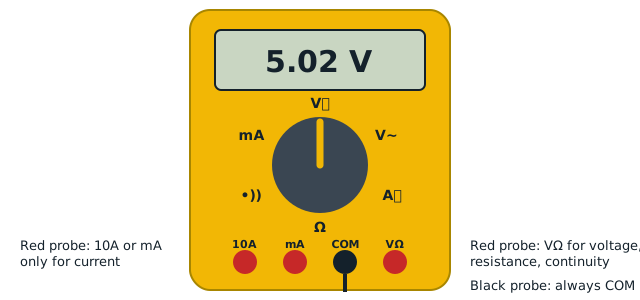
Measure voltage, current, resistance and continuity safely, set the right mode and range, and avoid the mistake that blows the meter's fuse.
→ move the red probe back after measuring A
A practical, budget-aware list of the tools and supplies you actually need to build Arduino and robotics projects, in the order to buy them.
→ temperature-controlled iron first
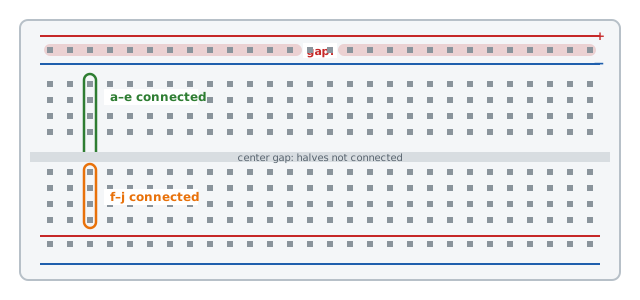
How the rows and rails inside a solderless breadboard connect, how to lay out circuits cleanly, and the mistakes that cause most beginner failures.
→ check the rail break in the middle!
Find what matters in an electronics datasheet, from pinouts and absolute maximum ratings to electrical characteristics and application circuits.
→ absolute max is a cliff, not a target
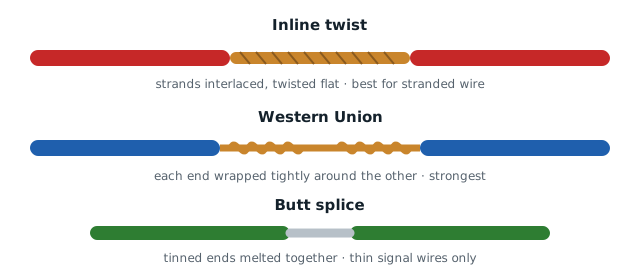
A step-by-step guide to joining two wires with solder: stripping, tinning, the inline and Western Union splices, heat shrink, and how to tell a good joint from a bad one.
→ slide the heat shrink on first
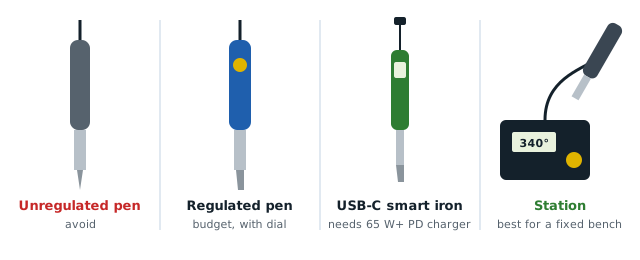
What actually matters when buying your first soldering iron: temperature control, power, tips, station vs pen vs USB-C irons, and the cheap irons to avoid.
→ temperature control beats wattage
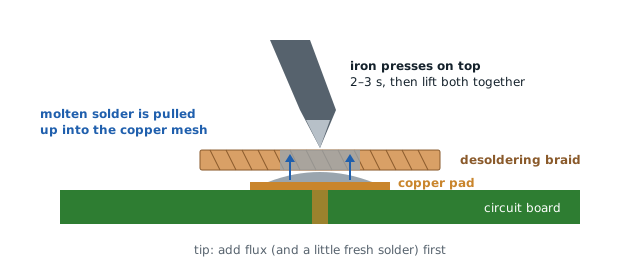
Remove components and fix mistakes without lifting pads, using desoldering braid, a solder sucker, fresh solder and a few pro tricks, with step-by-step instructions for each method.
→ Add solder before you remove solder
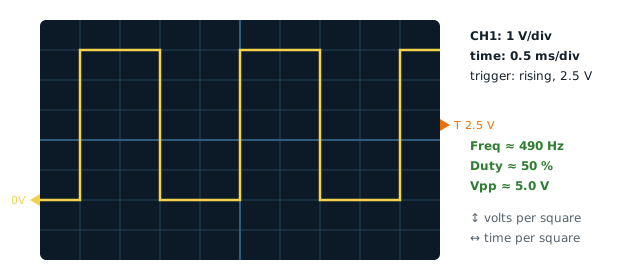
What an oscilloscope shows that a multimeter can't, the three groups of controls (volts, time, trigger), probe setup and compensation, a first measurement of Arduino PWM, and how to choose a first scope.
→ Volts up and down, time left to right
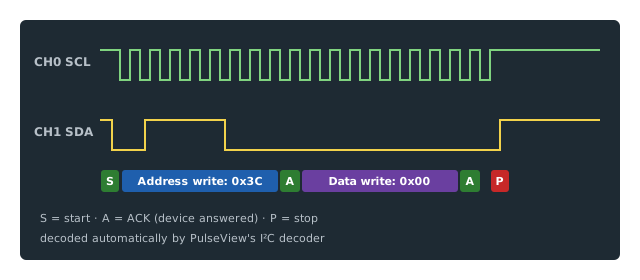
How an 8-channel USB logic analyzer and the free PulseView software let you see and decode the digital signals between your Arduino and its modules, with setup steps and a first I2C capture.
→ Sample at least 4× faster than the signal, ideally 10×
What the parts in a typical Arduino starter kit are, what each one is for, a sensible order to learn them in, how to choose a kit, and the extra tools no kit includes.
→ Choose a kit by its parts list, not by the piece count
What flux actually does, the difference between rosin, no-clean and water-soluble flux, when the flux inside your solder isn't enough, how to apply extra flux and how to clean the residue off a board.
→ solder flows where flux has been
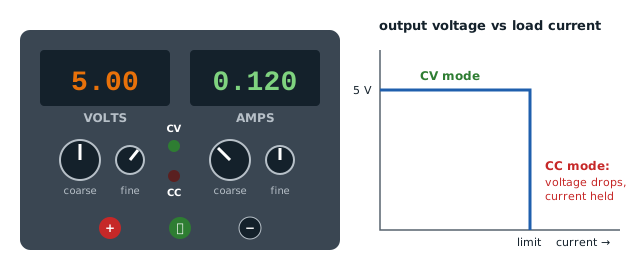
How a lab bench power supply works, what CV and CC mode mean, how to set the current limit before connecting a circuit, linear vs switching supplies, the green earth terminal, and how to choose one for a hobby bench.
→ set the current limit with the leads shorted